
ATEX for dusts: zones 20, 21, 22 and Ex t protection
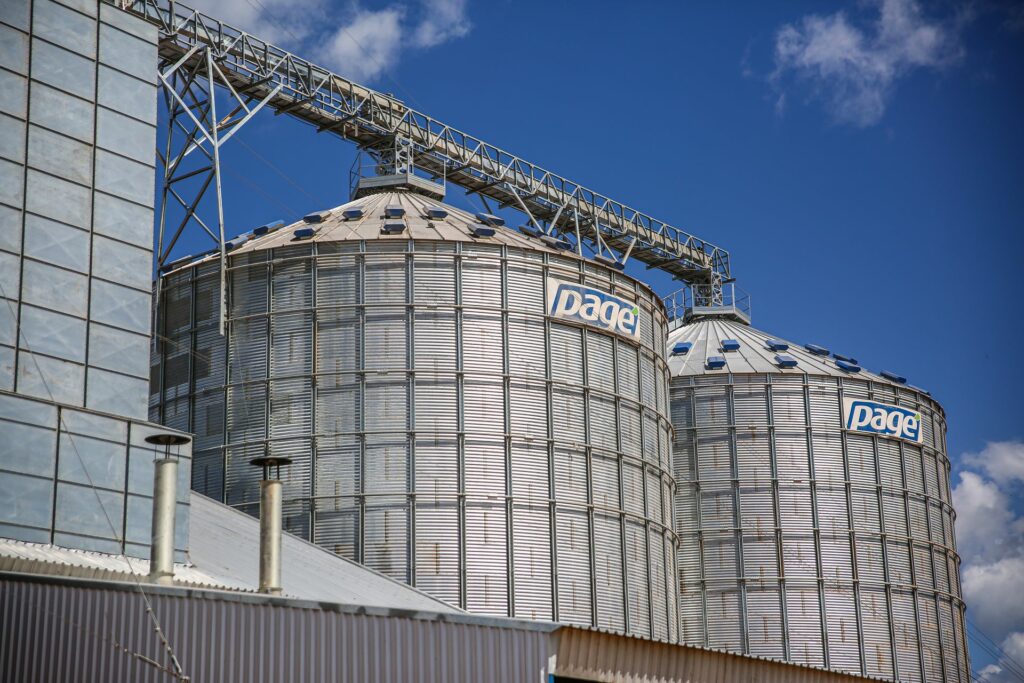
A combustible dust suspended in air can explode just like a gas. Silos, mills, sugar refineries, joinery shops, recycling, pharmaceuticals or powder metallurgy: many sites are concerned, often without knowing it.
Dust zones
| Zone | Presence of a dust cloud | Category / EPL |
|---|---|---|
| Zone 20 | Continuously or frequently | 1D / Da |
| Zone 21 | Occasionally in normal operation | 2D / Db |
| Zone 22 | Not likely in normal operation, or only briefly | 3D / Dc |
Dust layers count too: a layer on hot equipment can ignite, then raise and ignite a cloud.
Dust groups
- IIIA: combustible flyings, such as fibres.
- IIIB: non-conductive dusts: flour, sugar, wood, plastics.
- IIIC: conductive dusts, such as metal dusts. It is the most severe group: IIIC equipment is also suitable for IIIB and IIIA.
Ex t protection by enclosure
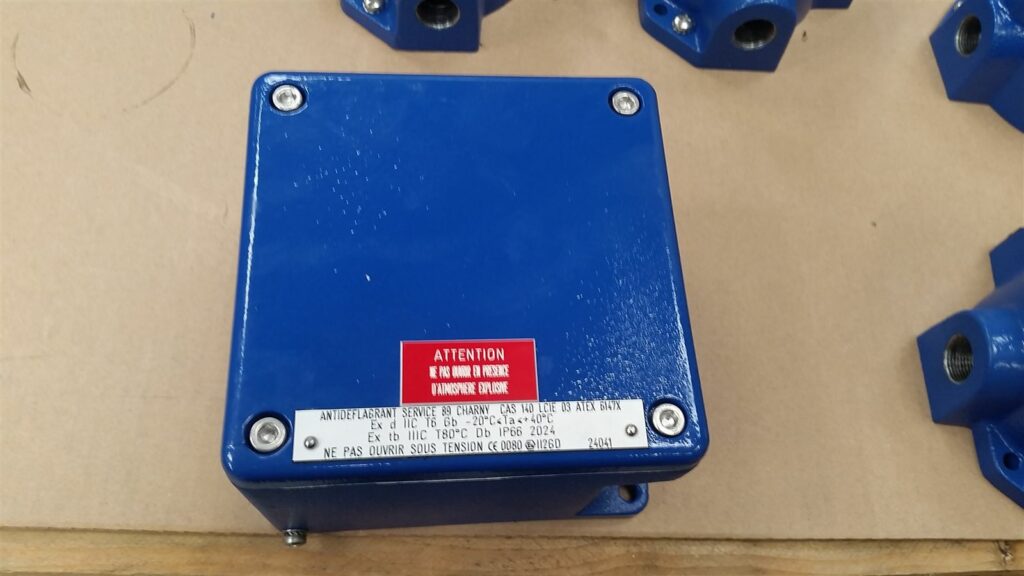
The Ex t type of protection (EN/IEC 60079-31) relies on a dust-tight enclosure (IP6X for levels ta and tb, and for tc in IIIC; IP5X permitted for tc in IIIA and IIIB), and a controlled surface temperature. The marking gives this temperature in degrees, for example T85 °C, not as a T1 to T6 class as for gases.
The surface temperature must not exceed 2/3 of the cloud ignition temperature and must be at least 75 K below the ignition temperature of a 5 mm layer (derating above 5 mm, EN/IEC 60079-14). The site operator must know these values, which often come from laboratory tests.
Gas and dust in the same place
Some sites combine both risks. Our enclosures can be marked for both, for example II 2 G/D, as for our emergency stop protection in petrochemicals.
Our solutions
Our Ex e enclosures and Ex d enclosures are available in versions certified for dusts. See also our agriculture and food processing page.