
ATEX and IECEx standards (EN/IEC 60079)
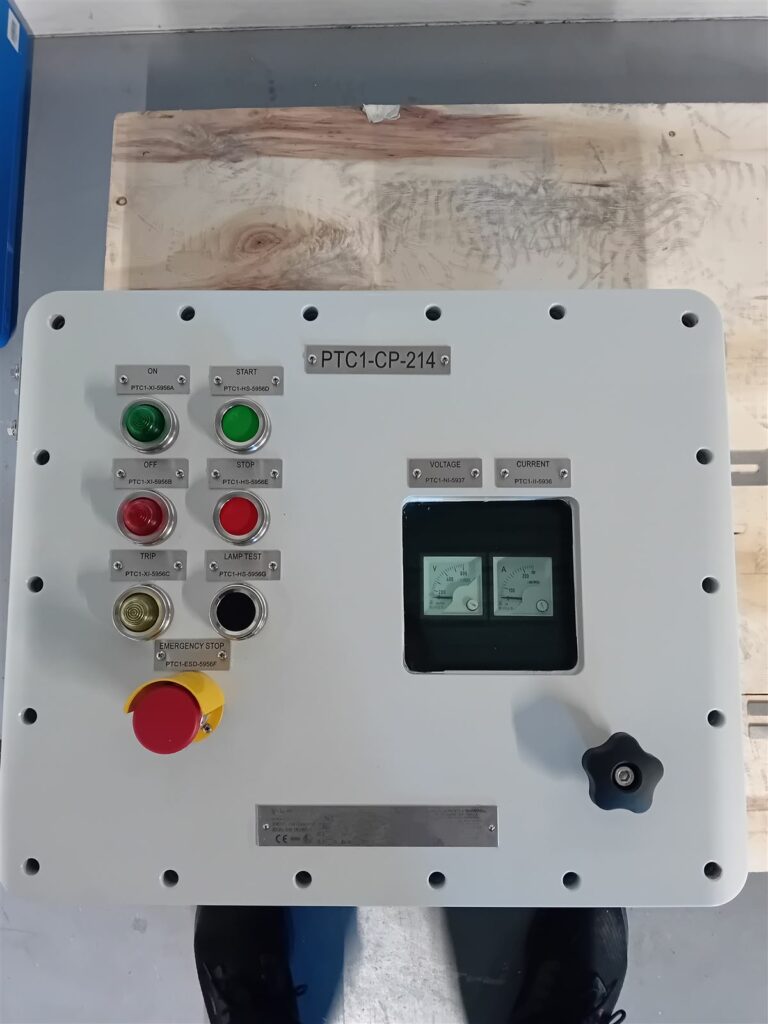
Directive 2014/34/EU sets the essential requirements. Harmonised standards describe how to meet them. For electrical equipment, the core is the EN/IEC 60079 series, shared by European ATEX and the international IECEx system.
Design standards
| Standard | Subject |
|---|---|
| EN/IEC 60079-0 | General requirements for all types of protection |
| EN/IEC 60079-1 | Flameproof enclosures “d” |
| EN/IEC 60079-7 | Increased safety “e” |
| EN/IEC 60079-11 | Intrinsic safety “i” |
| EN/IEC 60079-18 | Encapsulation “m” |
| EN/IEC 60079-31 | Dust ignition protection by enclosure “t” |
| EN ISO 80079-36 and -37 (ISO 80079-36 and -37) | Non-electrical equipment |
Our Ex d enclosures are designed to parts 0 and 1, and our Ex e enclosures to parts 0 and 7, plus part 31 for the dust version.
Installation and operation standards
| Standard | Subject |
|---|---|
| EN/IEC 60079-10-1 and 10-2 | Area classification: gases, dusts |
| EN/IEC 60079-14 | Design, selection and erection of electrical installations |
| EN/IEC 60079-17 | Inspection and maintenance of installations |
| EN/IEC 60079-19 | Equipment repair, overhaul and reclamation |
They apply to the site operator and the installer. See our installation and maintenance page.
Why follow the editions
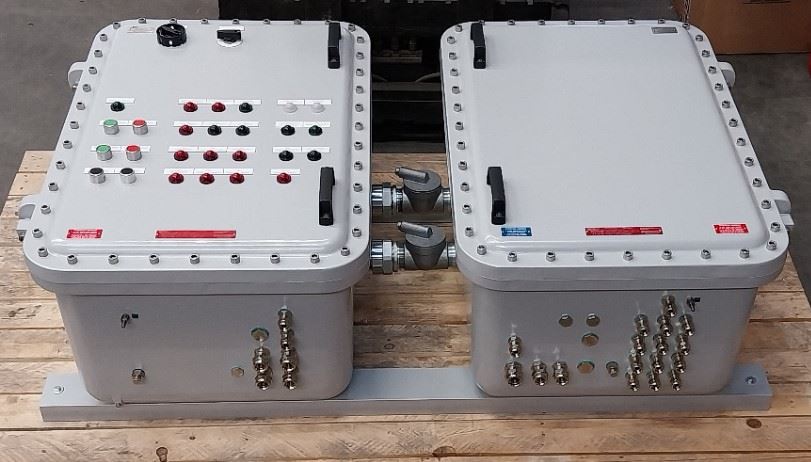
Standards change regularly. A new edition can change clearance distances, tests or marking. A piece of equipment remains compliant with the edition in force when it was certified, but, for new equipment, the manufacturer checks that its certificate still reflects the state of the art and meets the directive’s requirements. Our design office follows these changes for every build.
ATEX or IECEx?
The technical requirements are very close, as EN and IEC standards are aligned apart from some edition differences. The procedures differ: IECEx always requires third-party certification, whereas ATEX category 3 is self-declared, and the countries that recognise them are not the same. See ATEX, IECEx and international certifications.