
ATEX glossary
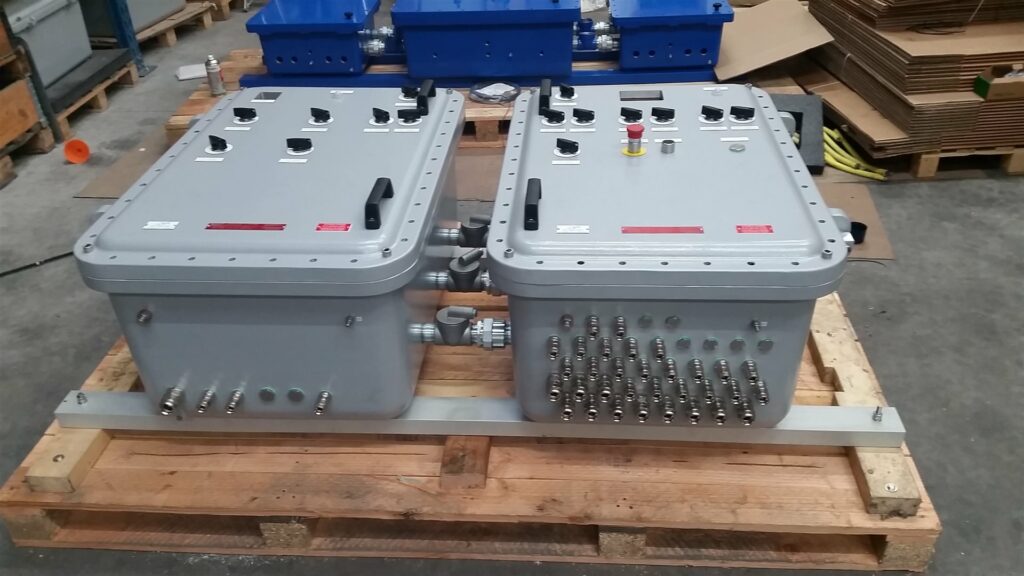
ATEX terms come up in every datasheet, every specification and every marking. Here are their definitions. The list follows the French alphabetical order of the original terms.
A to D
- ATEX: short for the French “ATmosphères EXplosibles” (explosive atmospheres). Refers to the two European directives on explosion risks: 2014/34/EU for equipment and 1999/92/EC for worker protection.
- Explosive atmosphere: mixture with air of combustible gases, vapours, mists or dusts, in which combustion can spread after ignition.
- EU-type examination certificate: document issued by a notified body certifying that an equipment model complies with Directive 2014/34/EU.
- Temperature class (T1 to T6): maximum surface temperature a piece of equipment can reach. T6 is 85 °C, the most severe. See gas groups and temperature classes.
- EU declaration of conformity: document in which the manufacturer declares, under its sole responsibility, that its product complies with the directive.
- DRPCE (explosion protection document): the French explosion protection document, mandatory for the operator of a hazardous site. See Explosion protection document and zoning.
E to H
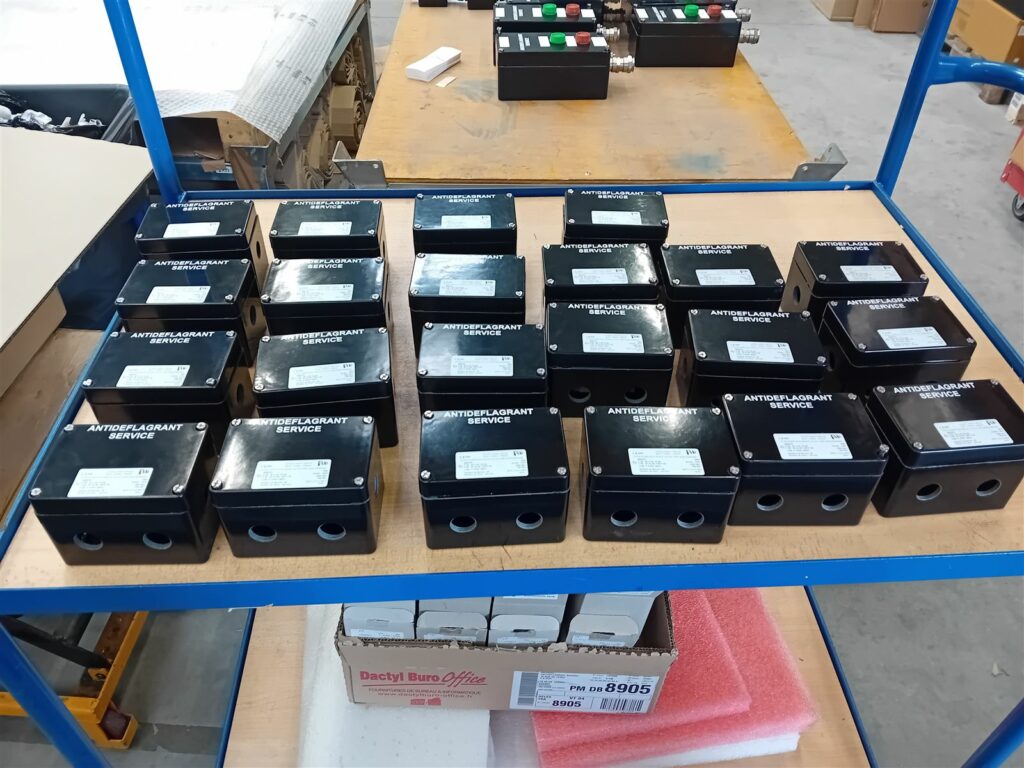
- EPL (Equipment Protection Level): protection level of a piece of equipment: Ga, Gb, Gc for gases; Da, Db, Dc for dusts. Gb corresponds to zone 1 and is also suitable for zone 2.
- Ex d (flameproof enclosure): type of protection in which the enclosure withstands an internal explosion and prevents it from spreading outside. See our Ex d enclosures.
- Ex e (increased safety): type of protection that prevents arcs, sparks and excessive temperatures. See our Ex e enclosures.
- Ex i (intrinsic safety): limiting the energy of circuits so that no spark can ignite the atmosphere.
- Ex m, Ex o, Ex p, Ex q, Ex t: encapsulation, liquid immersion, pressurisation, powder filling, dust ignition protection by enclosure.
- Group I / II / III: group I for mines susceptible to firedamp; group II for gases (IIA, IIB, IIC); group III for dusts (IIIA, IIIB, IIIC). Note: in ATEX marking, directive group II covers gases and dusts (II 2 G, II 2 D). Groups II and III above are those of the EN/IEC 60079 standards.
- IIB+H2: group IIB extended to hydrogen, without covering acetylene or carbon disulphide. See our hydrogen enclosures.
I to O
- IECEx: international certification system for Ex equipment, based on the IEC 60079 standards. See ATEX, IECEx and international certifications.
- IP / IK rating: sealing against solids and liquids, impact resistance. See IP and IK ratings.
- Flamepath: calibrated gap between two parts of an Ex d enclosure, which cools the gases from an internal explosion.
- LEL / UEL: lower and upper explosive limits. Between the two, the mixture can explode.
- ATEX marking: regulatory marking on the equipment: Ex hexagon, group, category, type of protection, gas group, temperature class. See ATEX marking.
- Notified body: body authorised by a member state to assess the conformity of ATEX equipment, for example INERIS or LCIE in France.
P to Z
- Cable gland: cable entry device that maintains the enclosure’s type of protection. See choosing an ATEX cable gland.
- QAN / QAR: production quality assurance notification (ATEX) and quality assessment report (IECEx), which certify that production is under control.
- Auto-ignition temperature: minimum temperature at which a gas ignites spontaneously on contact with a hot surface.
- Zone 0, 1, 2: gas zones, according to how often an explosive atmosphere is present. Zone 20, 21, 22: their equivalents for dusts. See ATEX zones.
A term is missing, or you have a question about your installation? Our design office will answer.