
Aluminium alloy, stainless steel or polyester: choosing the material of an ATEX enclosure
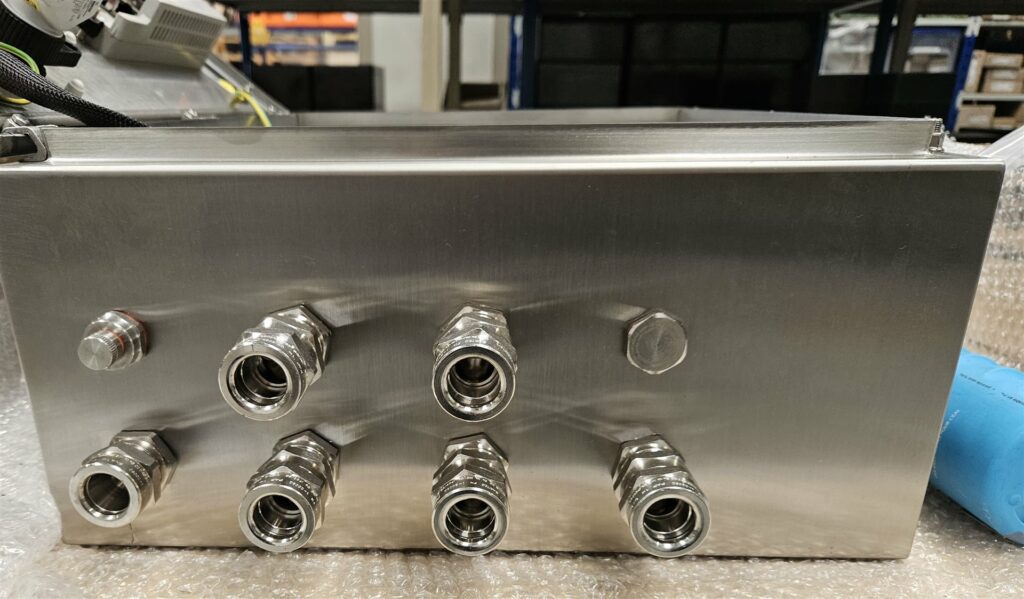
The type of protection and the zone are not enough to define an enclosure. The enclosure material decides its service life on site: against corrosion, impacts, chemicals and climate.
The three main families
| Criterion | Aluminium alloy | 316L stainless steel | Reinforced polyester |
|---|---|---|---|
| Weight | Medium | High | Light |
| Corrosion resistance | Good, with paint | Very good, including in salty environments | Very good |
| Impact resistance | Good | Very good | Good, depending on thickness |
| Chemicals | Depends on the product | Wide resistance | Wide resistance |
| Point to watch | Magnesium content limited by EN/IEC 60079-0 | Weight and cost | Electrostatic charges |
Aluminium alloy: the common choice
Cast aluminium alloy flameproof enclosures offer a good compromise between weight, robustness and cost. A suitable paint protects them in most industrial atmospheres.
316L stainless steel: aggressive environments
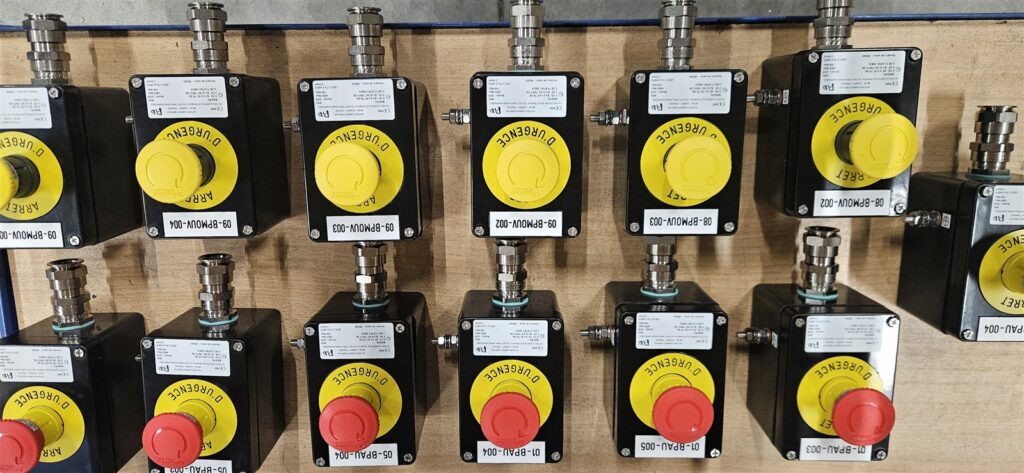
In marine, offshore, pharmaceutical or food processing environments, 316L stainless steel resists salt, frequent washing and many chemicals. See our 316L stainless steel ATEX enclosures and the marine and offshore industry page.
Polyester: light, and antistatic when graphite-loaded
Glass-fibre reinforced polyester is light and does not rust. It is widely used for Ex e increased safety. In ATEX zones, it must be treated against the build-up of electrostatic charges, or its surface area must be limited according to the gas group.
Other elements to choose
- The cable glands: nickel-plated brass, stainless steel or polyamide, depending on the enclosure and the environment.
- Fasteners, hinges and fixings, preferably in stainless steel in humid environments.
- Seals suited to the ambient temperature range.
- Protection against UV and weather: roof or canopy, as on our enclosures for the Middle East.
Describe your environment in your request, and our design office will suggest the right material.